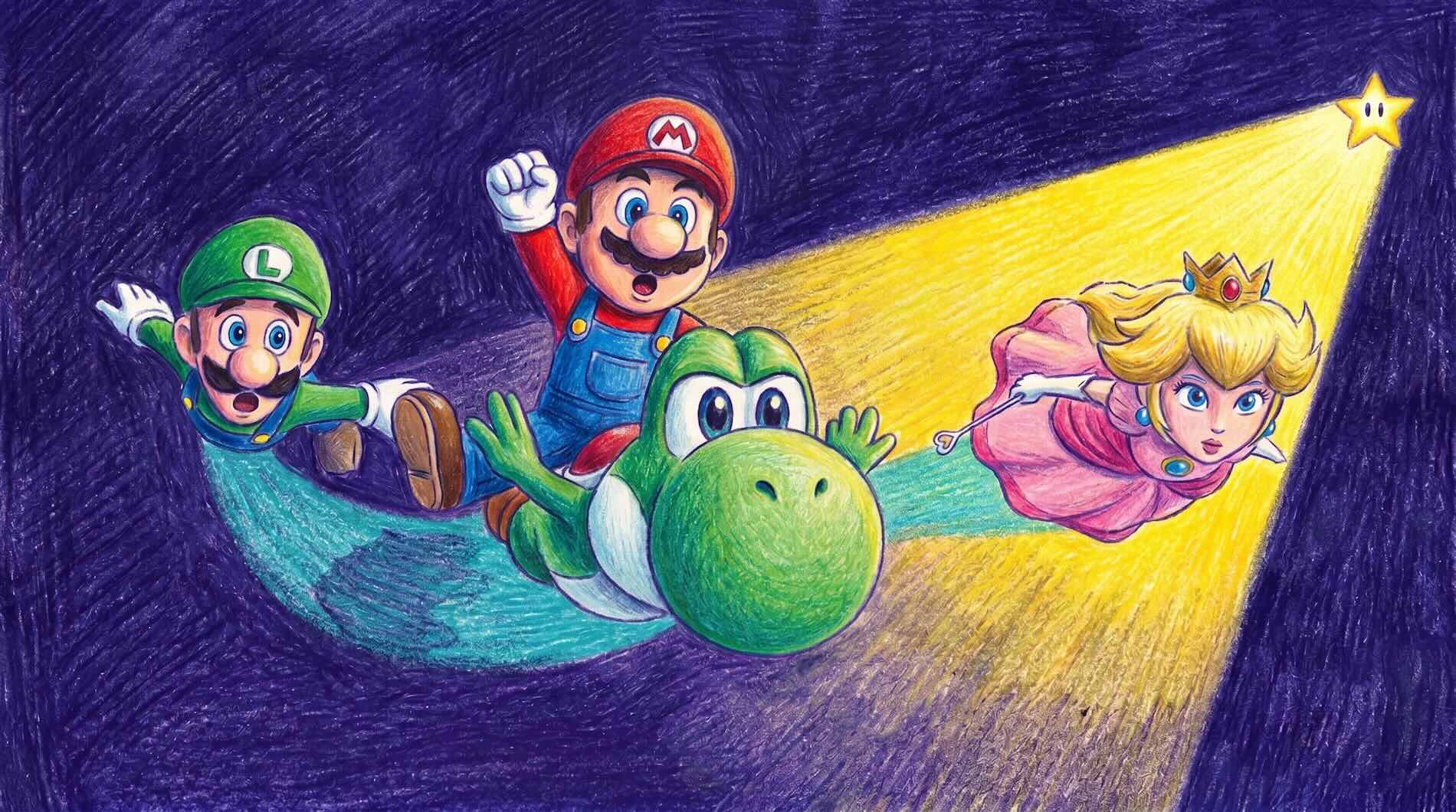
How 'The Super Mario Galaxy Movie' redefined the 2026 box office


The Super Mario Galaxy Movie dominated the 2026 box office from the moment it hit theaters on April 1st, 2026.
But while revenue figures often capture headlines, location analytics and survey data reveal a deeper story — showing how a single family-oriented blockbuster can reshape theater attendance patterns, shift audience demographics, and even influence the surrounding local economy.
Key box office insights
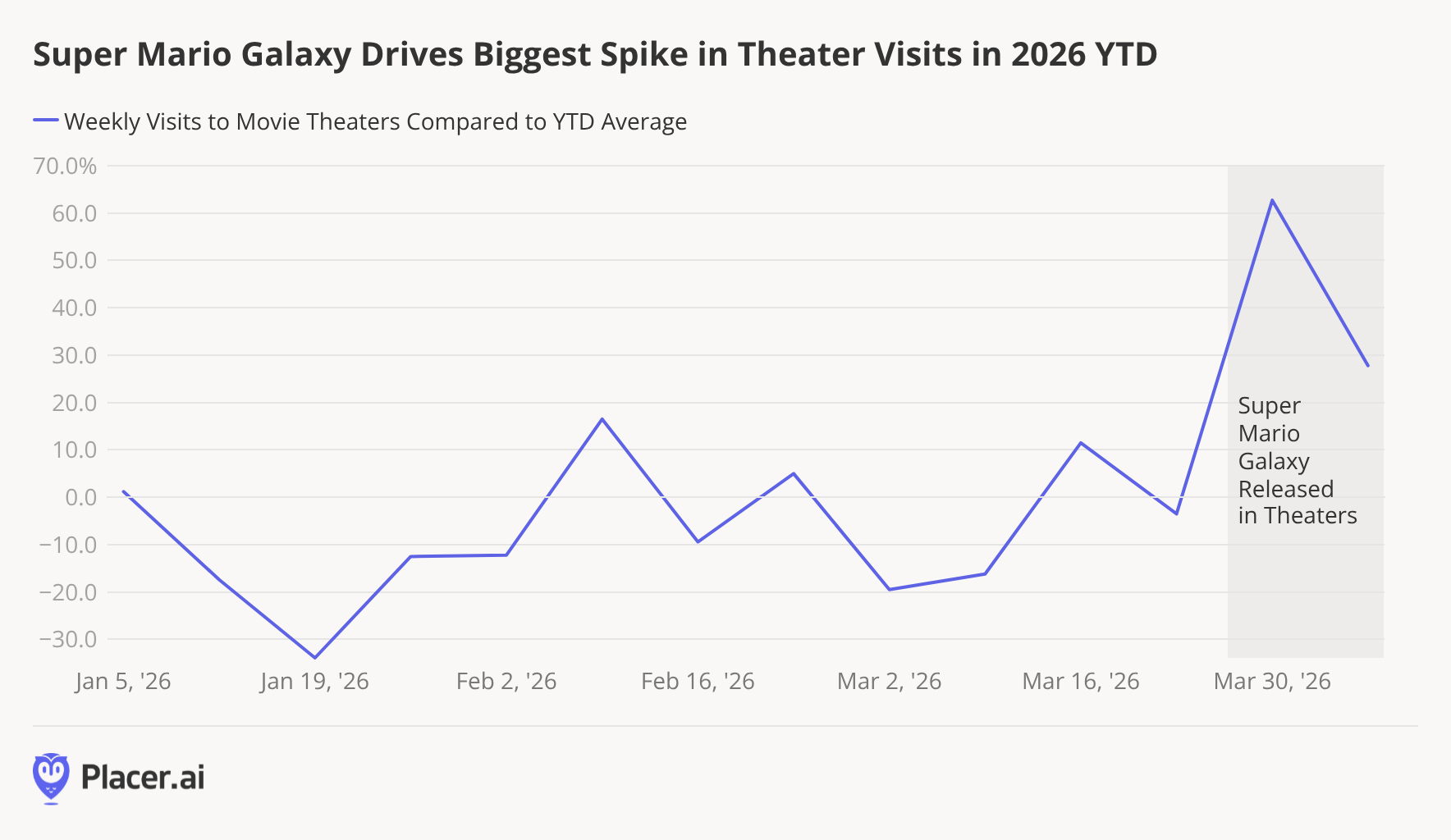
- The Super Mario Galaxy Movie (2026) drove a $130M opening weekend with a 62.7% increase in nationwide theater visits (above the 2026 year-to-date weekly average).
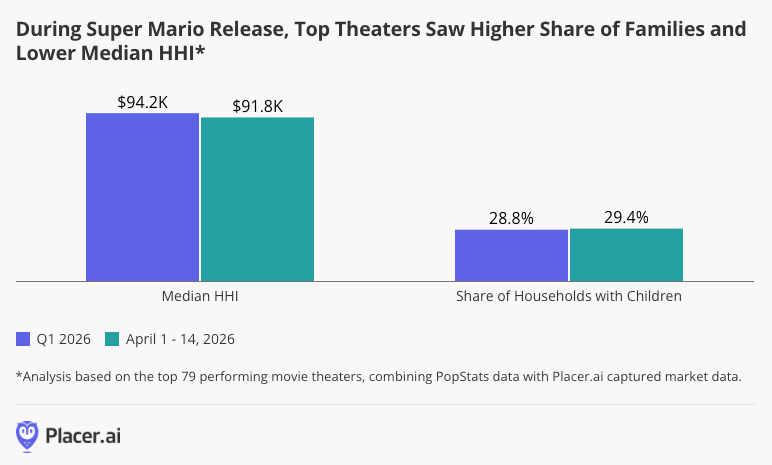
- Traffic was fueled by a ‘nostalgic handoff’ from parents to children, reflected by a shift in audience to families (29.4% share) and lower median HHI ($91.8K).
- Post-movie dining drove a 2.6% increase in QSR (quick-service restaurant) traffic.
What was the extended "Mario Effect"?
The Super Mario Galaxy Movie grossed $130 million nationwide during its opening weekend, making it the biggest domestic debut of the year so far. But the film’s impact extended well beyond that initial surge.
During the week of its debut, overall visits to movie theaters nationwide rose 62.7% above the 2026 year-to-date weekly average, according to data from Placer. And the effect lingered into the following week, when visits remained elevated by 27.8%.
This sustained momentum was also reflected in sheer market dominance:
- Market share: The film accounted for 67% of total box office revenue and 74% of all tickets sold during the weekend of its debut.
- Sustained demand: Its "hold" remained strong into week two, capturing 60% of all admissions in its second weekend.
Shifting audience profiles
Beyond sheer volume, the film’s massive brand appeal also drew a meaningfully different audience than the Q1 releases that preceded it.
- More families with children: Among 79 top-performing theaters, the share of households with children in theater trade areas rose to 29.4%, up from a 28.8% average during the rest of the year. This family skew is also reflected in the gap between revenue (67%) and tickets sold (74%) mentioned above, which points to a high volume of lower-priced child tickets.
- A new generation of fans: According to The People Platform, audiences skewed slightly male (55%), pointing to a “nostalgic handoff,” with fathers introducing a new generation to a beloved childhood franchise.
- A more economically-diverse audience: At the same time, this influx of families coincided with a dip in the median household income (HHI) of theater trade areas, which fell from $94.2K to $91.8K. This suggests the "Mario" brand acted as a cultural equalizer, pulling in families from broader economic backgrounds.
Operational impact: fast turnover and morning matinees
The family-heavy crowd didn't just change who was in the theater, but how they used the space:
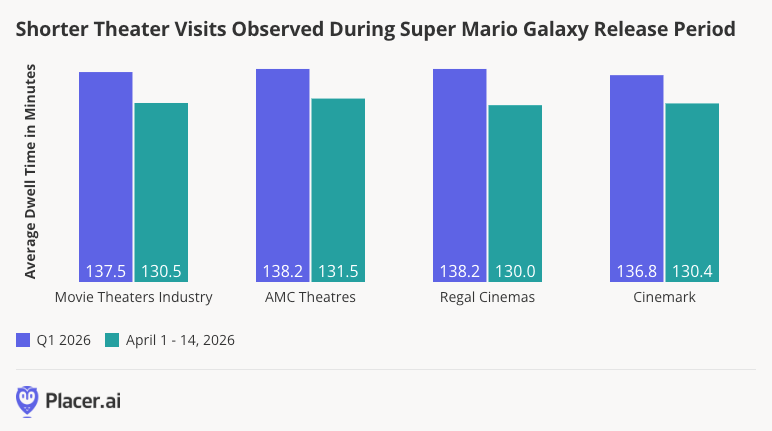
- Shorter dwell times: According to Placer data, the industry saw a 5% drop in average dwell time, falling from 137.5 to 130.5 minutes. This is attributed to the film’s brisk 98-minute runtime, which is significantly shorter than standard Q1 blockbusters.
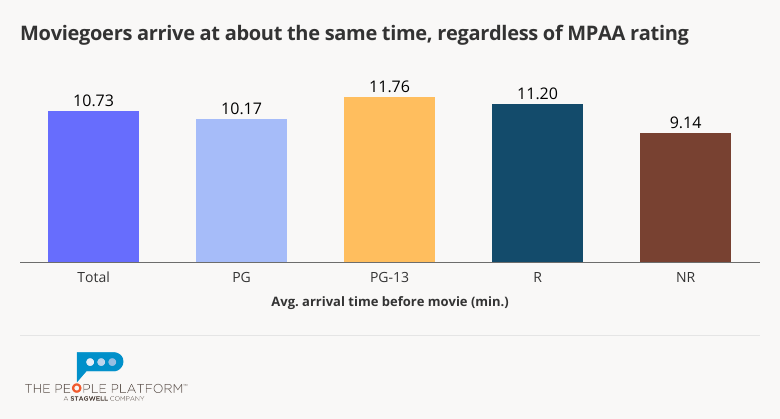
- But while families may spend less time inside the theater for a family-friendly film (as the run time is shorter), their arrival patterns are virtually the same regardless of the movie's MPAA rating, according to a cinema survey from The People Platform, conducted between January and April 2026.
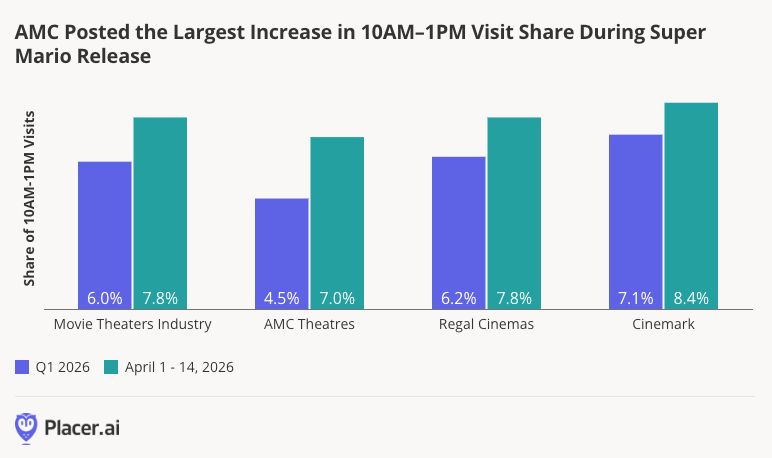
- A morning surge: Families flocked to 10 AM—1 PM showtimes. AMC Theatres led this trend, seeing its early-day visit share jump from 4.5% to 7.0%.
The "why" behind the buy
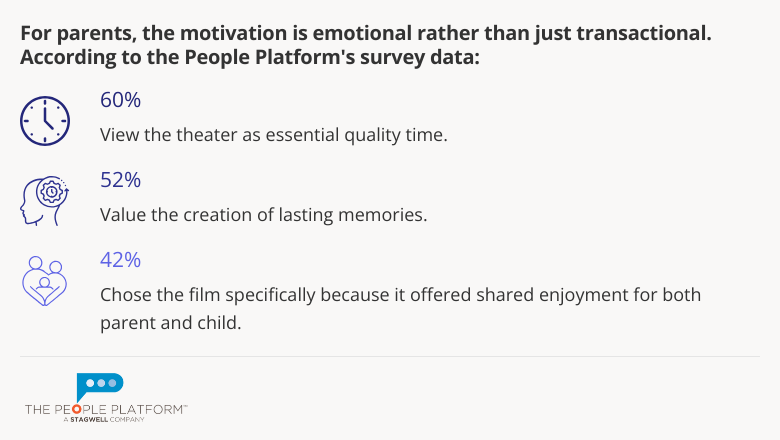
For parents, the motivation is emotional rather than just transactional. According to The People Platform’s survey data:
- 60% view the theater as essential quality time.
- 52% value the creation of lasting memories.
- 42% chose the film specifically because it offered shared enjoyment for both parent and child.
And this emotional driver toward "memory making" translates directly into a broader economic impact on theater-adjacent businesses. Because families view the outing as a holistic "experience," the theater trip often serves as the anchor for a larger excursion.
- More QSR visits: During the first two weeks of the release, major chains including AMC, Regal, and Cinemark saw a significant uptick in the share of moviegoers visiting Quick-Service Restaurants (QSRs) immediately following their film.
Post-movie QSR visitation rose from a Q1 average of ~5.0%—5.2% to between 6.5% and 7.6%. This suggests that when families show up for a shared cultural handoff, they extend that quality time into the local economy, highlighting the ripple effect of family-centric blockbusters on nearby dining traffic.
The family film advantage
In a fragmented media environment, family films deliver something increasingly rare: a reason for multiple generations to show up, together, at scale.
And as The Super Mario Galaxy Movie release demonstrates, that shared experience doesn’t just drive box office success—it reshapes audience composition, redefines in-theater behavior, and extends its impact well beyond the auditorium walls.
How The People Platform's audience measurements can help drive insights
- How many tickets will be sold this coming weekend? Find out on our next Cinema Ranker for a box office forecast and follow us on LinkedIn to stay up to date with the latest cinema industry insights.
- To learn more about The People Platform and explore our audience measurement solutions designed to support box office forecasting and cinema audience insights, click here.
- Don't forget to also explore the broader suite from The Marketing Cloud to unlock AI-driven marketing solutions that help teams across market research, comms, creative, and media.